Sigma Lithium (SGML) - Investment Brief
SGML
Sigma Lithium: A $6 Million Problem in a $400 Billion Opportunity
The lithium battery market is exploding—projected to reach $182-400 billion by 2030 from around $100 billion today. Electric vehicle sales are expected to more than double to 45 million units annually, while energy storage systems are growing at 30%+ yearly as utilities integrate renewable power.
The Asset: World-Class Costs, Perfect Timing (Almost)
Sigma Lithium sits at an interesting inflection point within this opportunity. The company operates one of the world's lowest-cost lithium operations at just $594 per tonne—second only to industry giant Talison, which operates at five times Sigma's scale. Currently producing 40,000 tonnes annually, their expansion plans target 120,000 tonnes by 2027, potentially capturing 1-3% of global market share. The asset is real, the cost advantage is verified.
But here's where the story gets complicated. As of Q3 2025, Sigma Lithium has just $6.1 million in cash.
The Problem: Racing Against the Cash Balance
Nine months earlier, in December 2024, they had $66 million. The company is burning through $3-5 million monthly, which means they have somewhere between one and two months of runway left without immediate financing. This isn't just tight—it's critical.
The path forward requires several dominoes to fall perfectly. Most immediately, management needs to close offtake agreements worth $75-100 million in prepayments. They've been promising these deals since August, traveling the world, meeting with potential customers. So far? Zero deals signed.
Beyond the financing crunch, Sigma needs to stop selling lithium at a loss. Q3 gross margin was negative 5.4%—spending $30.08 million to produce lithium they're selling for $28.55 million. This only works if lithium prices hold above $900 per tonne (currently $900-960) while they improve commercial execution.
The medium-term survival plan hinges on a $100 million loan from Brazil's development bank BNDES, which has been awarded but not yet disbursed. This funding, expected mid-2026, would finance the company's Phase 2 expansion to double production capacity. But there's a catch-22 embedded here: they need to survive long enough to receive the money, and they need lithium markets to cooperate to justify the expansion investment.
What to Watch: The Next 90 Days
What should investors watch? Cash balance is the immediate canary—anything below $5 million signals emergency. Q4 earnings in late January will be critical. If offtakes aren't closed by end of Q1 2026, months of negotiations have essentially failed. Gross margins need to turn positive within two quarters. And lithium prices must stay above $900; below $800 triggers crisis mode.
The Verdict: A Lottery Ticket with Better Odds
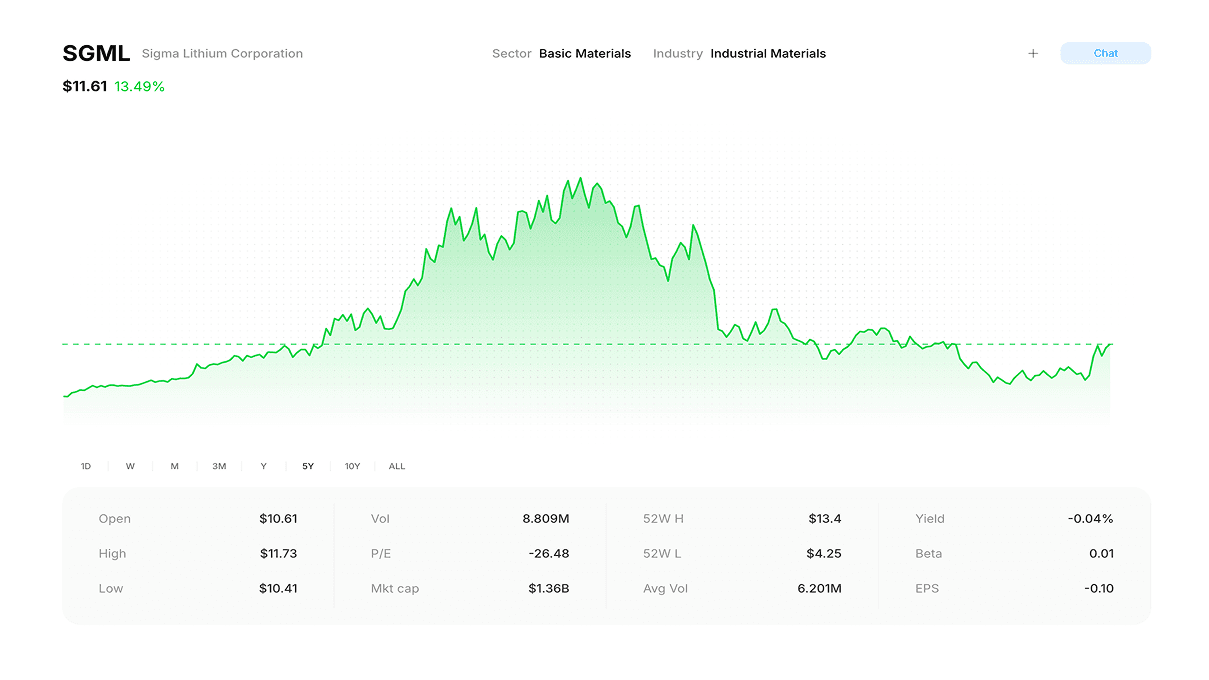
The investment thesis is binary. Bull case: offtakes close, lithium stabilizes, BNDES funds arrive—stock hits $25-35 (2-3x return). But that requires everything going right simultaneously. Base case involves dilution and sideways trading at $8-15. Bear case—failed negotiations or collapsing lithium prices—sends the stock to $2-5, down 60-80%.
This is a race against the cash balance. Sigma has built something real—a world-class, low-cost lithium operation with genuine competitive advantages. But they caught brutal timing, ramping production just as lithium markets crashed. Unlike peers like Albemarle or Pilbara with billion-dollar war chests, Sigma has no financial cushion and no major partner backstop.
For aggressive investors, this is a 1-3% portfolio allocation at most—an asymmetric bet with better odds than most speculations. The asset is real, costs are verified, and if markets cooperate while management executes, returns could be substantial. But the next 90 days will determine whether this becomes a recovery story or a cautionary tale about undercapitalization in cyclical markets.
The clock is ticking, measured in millions per month.
Sources: Insighthread, SEC filings, earnings transcripts, industry research
Disclaimer: For informational purposes only. Not investment advice. High-risk speculation.