We're Not Optimizing for Google. We're Optimizing for the Truth.

Every product has a customer, and it helps to ask who that customer really is.
For much of the financial web, the answer is not the person reading.
Who the customer is on an ad-supported financial news site
A site funded by advertising earns money when pages are viewed, and pages get viewed when they rank.
So a large part of the audience, in practice, is a search engine's ranking system.
That fact shapes decisions without anyone sitting down to make a bad one.
A topic is chosen because people search for it.
An article can run long to cover more keywords, not because the subject needed two thousand words.
Nobody has to be cynical for this to happen, because the incentive does the work.
How the ad model shapes what gets covered
The same pressure decides what gets written about.
Coverage follows search demand, which means popular tickers and familiar stories get attention while a quiet but important filing may get none.
It can also blur the line between editorial and promotional material.
Sponsored placements and paid press releases exist across the industry, and the FTC's native advertising guide says an ad must be readily identifiable as one, since a reader does not always see where one ends and the other begins.
We are not pointing at any outlet.
This is a feature of the business model, and it applies to any publisher that depends on the same revenue.
Why Insighthread is a subscription product
Insighthread is paid for by its subscribers, at $30 a month or $300 a year.
That gives us a different question to answer every day: is this useful to the person paying?
It also changes what we can build.
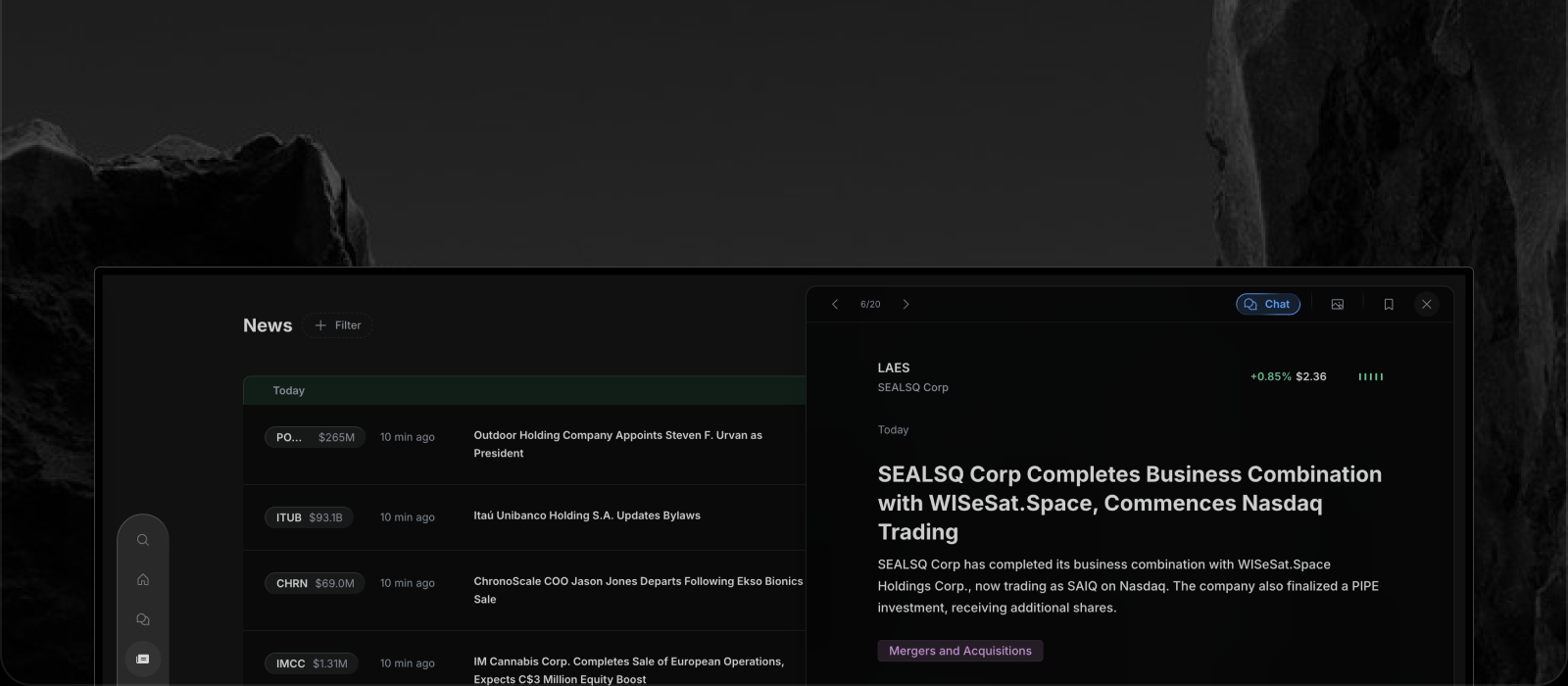
Our news is generated from SEC filings by a structured pipeline, with no editorial layer, so there is no place for a company to buy coverage.
An item exists because a filing exists.
And because we do not earn from page views, we have no reason to stretch a story.
What no incentive to pad looks like in the product
This is where the earlier choices in this series come from.
We keep every item to about 60 words because nothing rewards us for adding more, as we explain in Why Financial News Should Be 60 Words, Not 600.
We link every item to its source filing, which is the position described in The Primary-Source Principle.
An ad-funded product would find both choices expensive, since they send readers off the page quickly.
For us they are the product.
Chat, not padding, when you want to go deeper
Short does not have to mean stuck at the surface.
When you want more than the summary, you open the filing or ask the AI analyst, which already knows what you are looking at.
It answers from filings and transcripts, so the depth you get is built from the primary source.
The AI does say that it can make mistakes, and it asks you to double-check responses.
That is another reason the source is always one click away.
Optimizing for the truth, within reason
We should be honest about the limits of this argument.
A subscription has its own pressures, including the need to keep subscribers and the temptation to flatter them.
No business model makes an organization honest by itself.
What a model can do is remove a conflict, and ours removes the one between a reader's time and our revenue.
If you want to see what that feels like, start with the news feed.
The next post on this theme looks at what free content costs the person reading it: The Real Cost of "Free" Financial News.