How Insighthread's Insider Conviction Score Works
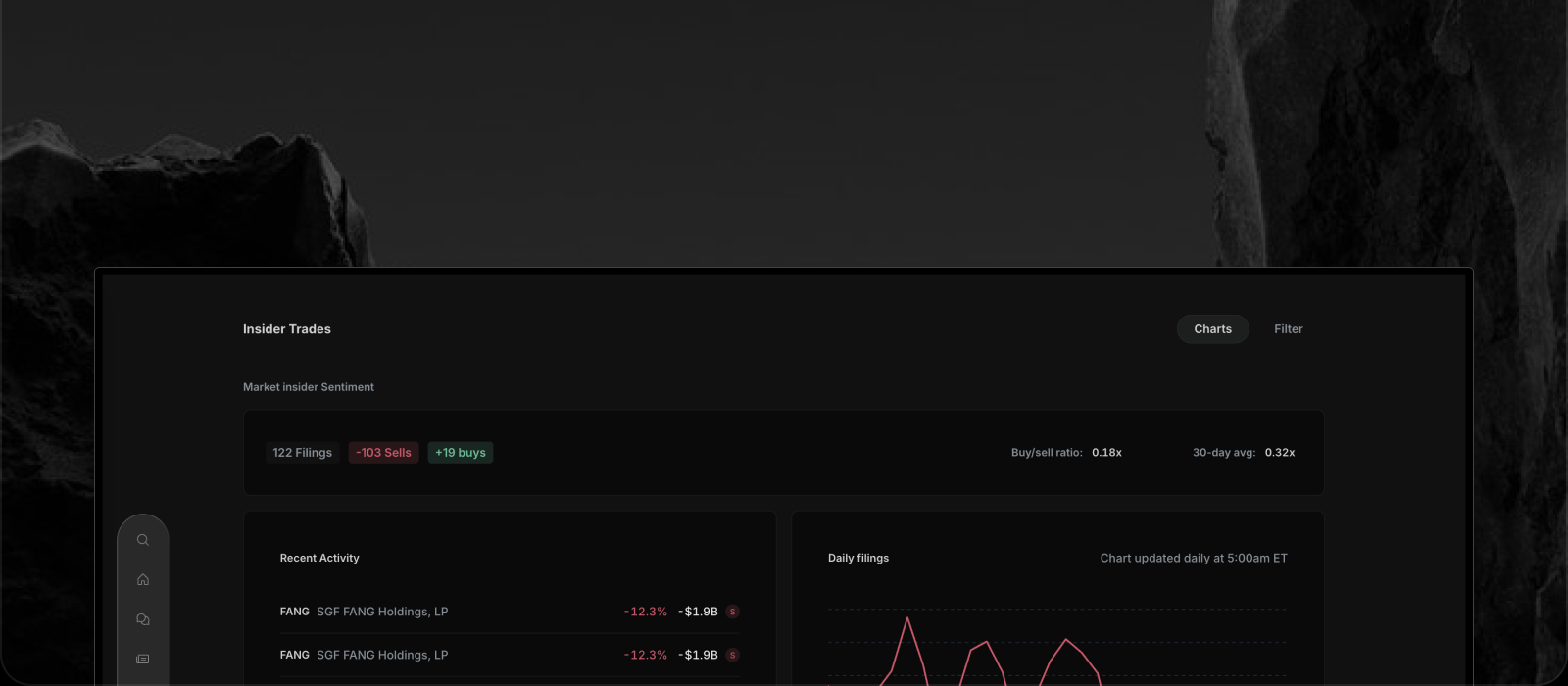

When a company insider buys or sells stock, the trade is public record.
The hard part is working out which trades are worth your attention.
Insighthread's conviction score exists to answer that, with a rating from 1 to 5 on each insider trade.
Why insider trades need a score
Insiders are officers, directors and owners of more than 10% of a company.
Their trades appear on Form 4 filings, and there are a lot of them.
Many are routine: stock grants, option exercises and shares sold to cover taxes.
A feed that treats all of them equally buries the few that carry information.
How Insighthread's insider conviction score is calculated
Each trade is rated from 1 to 5 based on four things.
The first is whether the transaction was an open-market trade.
A purchase or sale on the open market is a choice.
A grant, an option exercise or a tax withholding is compensation, and it says much less about how the insider feels.
The second is clustering.
If several insiders at the same company trade around the same time, that is a stronger signal than one person acting alone.
The third is size relative to the insider's total ownership.
A trade that changes a large share of someone's holding says more than a small one.
The fourth is recency.
A recent trade is more relevant than an old one.
A higher score means a stronger signal of genuine insider confidence.
Where to see the conviction score in Insighthread
On the Insider Trades page, the score appears as a 1-to-5 dot rating.
The Chart view opens with a market-wide picture: filings, sells, buys, the buy/sell ratio and its 30-day average.
Beneath that, High-Conviction Signals Today shows cards for the tickers with the strongest same-day signals.
Each card carries the dot rating, the average price, the net change in shares, the percentage of holdings changed and the total value.
A Sector Heat grid shows whether insiders in each sector have been buying or selling over the last 30 days.
Cluster Buy, Cluster Sell and Officers Only tables show coordinated trades, and clicking a row lists the individual insiders behind it.
Filter insider trades by conviction
The Filter page turns the score into a search tool.
You can set a minimum conviction, from "1/5 and above" up to "5/5", and combine it with other fields.
Those include ticker, insider title, transaction type, trade date, share price, quantity, value and sector.
So you can ask a precise question, such as which officers in one sector made open-market purchases rated 4 or higher.
Read the significance bar next to the score
Most trade tables also show a coloured bar at the right edge of each row.
Green means the insider increased their holding and red means they decreased it.
The bar's length reflects the percentage change in the holding, not the dollar value of the trade.
It is a quick way to see which trades moved the needle for the person making them.
What a conviction score can and can't tell you
A high score is a signal, not a guarantee.
Insiders sell for many reasons and buy for others, and none of them are visible in a filing.
The score helps you decide where to look first, and the filing behind each trade is there when you want to read more.
Insider trade data updates daily at 5:00am ET.
Open the Insider Trades page in Insighthread and start with today's high-conviction signals.