Frequency Electronics: The Ten-Bagger Nobody Was Watching
FEIM
Dec 23, 2025
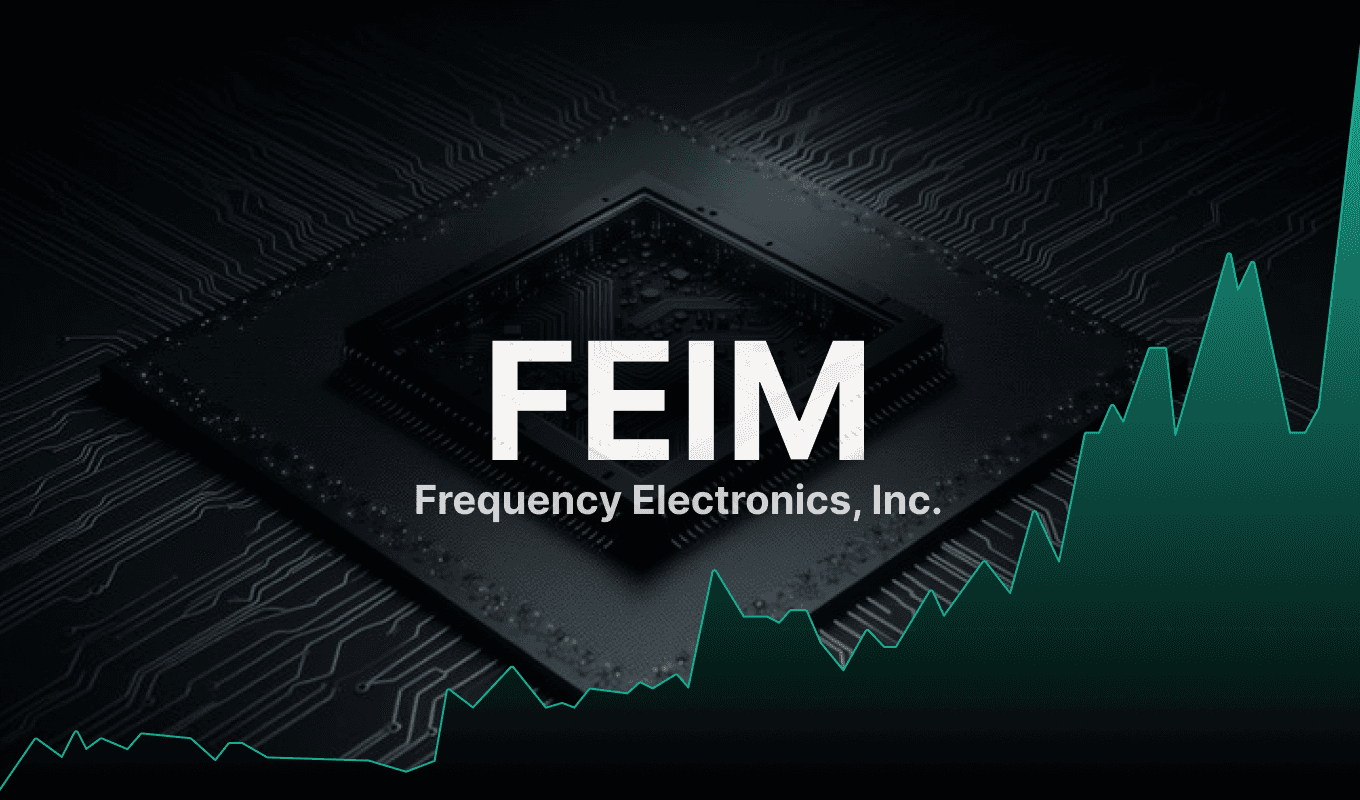
In 2022, Frequency Electronics traded at $5.40—a struggling defense contractor making precision timing systems for satellites. By December 2024, the stock touched $55. That's a ten-bagger in under three years. The final act was particularly dramatic: a 153% spike in two days that sent market cap from $60 million to $470 million. This wasn't meme stock speculation. This was a real business transformation meeting a massive industry shift at the perfect moment.
Building the Infrastructure for Space 2.0
Frequency Electronics makes atomic clocks and precision timing systems—the kind that sit inside satellites and ensure navigation, communication, and intelligence systems work with microsecond accuracy. For decades, they served the old satellite model: large, expensive spacecraft with 15-year lifespans that required exquisite atomic clocks. Each program delivered one or two high-precision units after three to five years of development. Revenue in fiscal 2024 was just $55 million, and margins were thin at 9% operating income.
Then the Department of Defense rearchitected its approach to space superiority. Instead of a few expensive satellites vulnerable to attack, the military is building proliferated constellations—hundreds of smaller, cheaper satellites in low Earth orbit with three to five year lifespans. The entire market structure changed overnight, and Frequency Electronics had the technical heritage to serve it.
When the Backlog Becomes the Story
The transformation shows in the numbers. In nine months of fiscal 2025, the company generated $49.8 million in revenue—already 90% of the prior full year. Operating margins doubled from 9% to 17%. The backlog hit $81 million before settling at $73 million, representing over a full year of revenue. Space revenue surged 77% year-over-year as milestone deliveries accelerated.
CEO Tom McClelland emphasizes that proliferated satellites currently represent less than 10% of their backlog but will grow dramatically over the next decade. They're also investing in quantum sensors—magnetometers for GPS-denied navigation and Rydberg sensors that function as miniature antennas. These are development-stage bets that leverage their atomic clock expertise, essentially free options on emerging multi-billion dollar markets. The company is debt-free, investing 10% of revenue in R&D, and just released an $11.9 million tax valuation allowance after proving sustainable profitability.
The Uncomfortable Math
Here's where the story gets complicated. At $48 per share, Frequency Electronics trades at roughly 39 times normalized forward earnings. The recent vertical spike—from $19 to $48 in days—suggests speculation has overtaken fundamentals. The entire market capitalization sits at $470 million on what will likely be $64 million in fiscal 2025 revenue. Defense peers typically trade at 15-20 times earnings.
The bull case requires believing proliferated satellites will deliver on their massive growth potential, that Frequency can execute the transition from boutique supplier to volume manufacturer, and that quantum sensors become material revenue streams within two to three years. The bear case points to valuation extremes, government budget uncertainty, customer concentration risk with Northrop Grumman and Lockheed Martin, and the reality that proliferated products are still largely in development.
The business transformation is legitimate. Revenue growth is real, margins are expanding sustainably, and the market opportunity is genuinely enormous. But when a stock runs ten times in three years and then spikes 153% in two days, you're no longer buying the transformation—you're buying the speculation on top of it. For investors who got in below $20, taking some profits makes sense. For new money, waiting for a pullback to $30-35 offers better risk-adjusted returns. This is a real company solving real problems in a growing market. It's just no longer priced like one.